
Thread Weight and How It Affects Accuracy in Quilting
When we talk about quilting accuracy, most people focus on things like cutting, seam allowance, and pressing.
When purchasing through links on this site, I may earn an affiliate commission at no cost to you.
Those things absolutely matter.
But there’s another small detail that plays a role in how clean and precise your piecing turns out: the thread you use.
Thread weight affects seam bulk, stitch formation, and how smoothly your machine runs. Choosing the right thread can make your piecing feel effortless, while the wrong thread can quietly introduce small frustrations.
Let’s look at how thread weight fits into accurate quilting.
The Thread I Use for Piecing
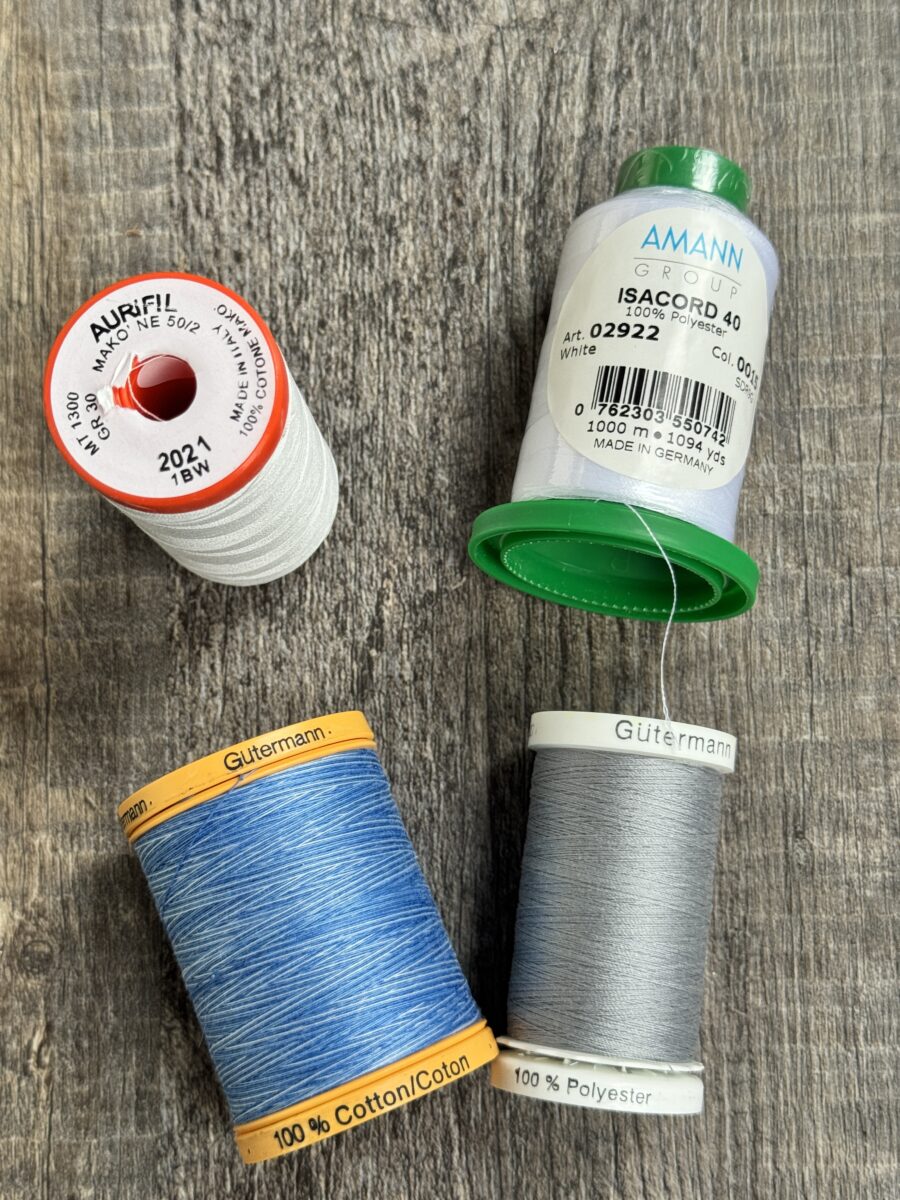
For almost all of my piecing, I use 50 weight Aurifil thread.
It’s a cotton thread that strikes a really nice balance between strength and thickness. It’s fine enough that it doesn’t create unnecessary bulk in seams, but still strong enough for durable quilt construction.
My go-to color is Aurifil 2000, which is a light tan. It blends well with most fabric collections, so I can usually piece an entire quilt without needing to switch thread.
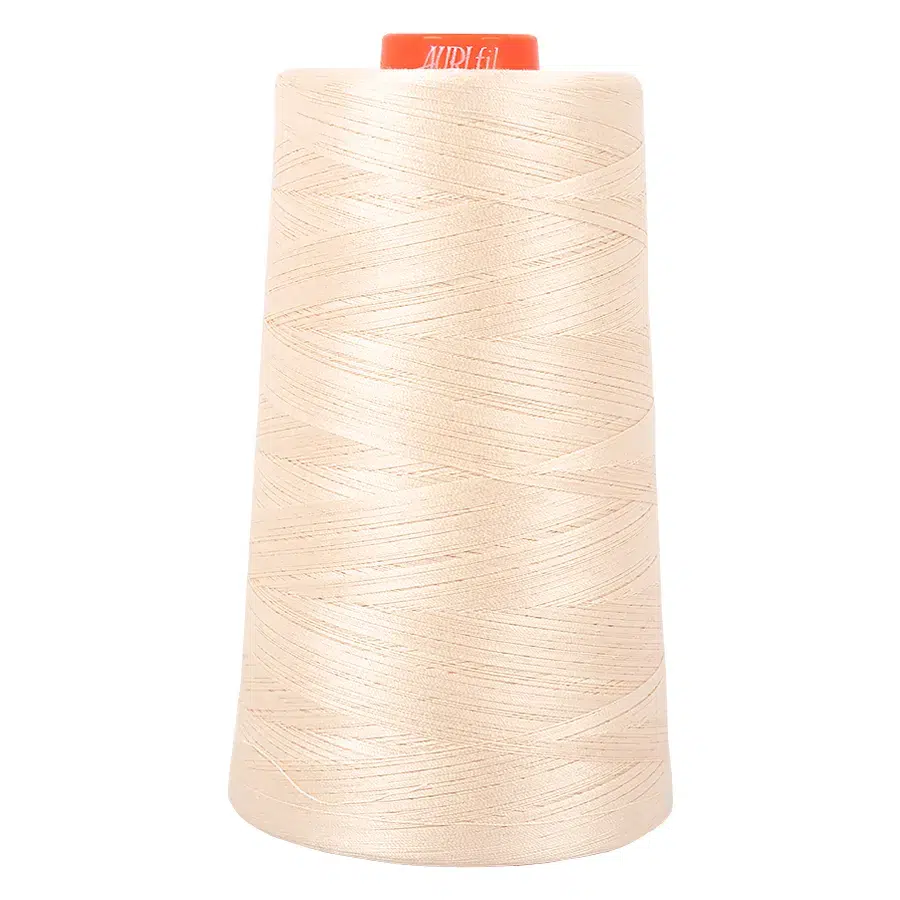
If I’m working with a quilt that has mostly dark fabrics, I might switch to a light grey so the thread blends a little better with those tones.
But for the majority of my projects, that light tan thread works beautifully.
Why Thread Weight Matters
Thread weight refers to how thick or thin the thread is.
With thread weights, the numbers work a little backwards.
Higher numbers mean finer thread, while lower numbers mean thicker thread.
For quilting cotton and standard piecing, 50 weight thread is widely considered the sweet spot. It’s fine enough that seams press flat and intersections aren’t overly bulky. At the same time, it’s strong enough to hold your quilt together through years of use and washing.
When seams stay flatter, it becomes easier for blocks to align and intersections to nest properly.
Thread and Machine Performance
Thread quality also affects how smoothly your machine runs.
Some threads produce more lint than others, which can build up in your machine over time. Excess lint can interfere with stitch formation and eventually lead to skipped stitches or tension problems.
One of the reasons I like Aurifil for piecing is that it tends to produce relatively little lint compared to many other cotton threads. That helps keep the machine running smoothly during long sewing sessions.
It’s a small detail, but over the course of an entire quilt project, it can make a difference.
Thread Choices for Other Quilting Tasks
While I use cotton thread for piecing, I switch to something different when I’m quilting.
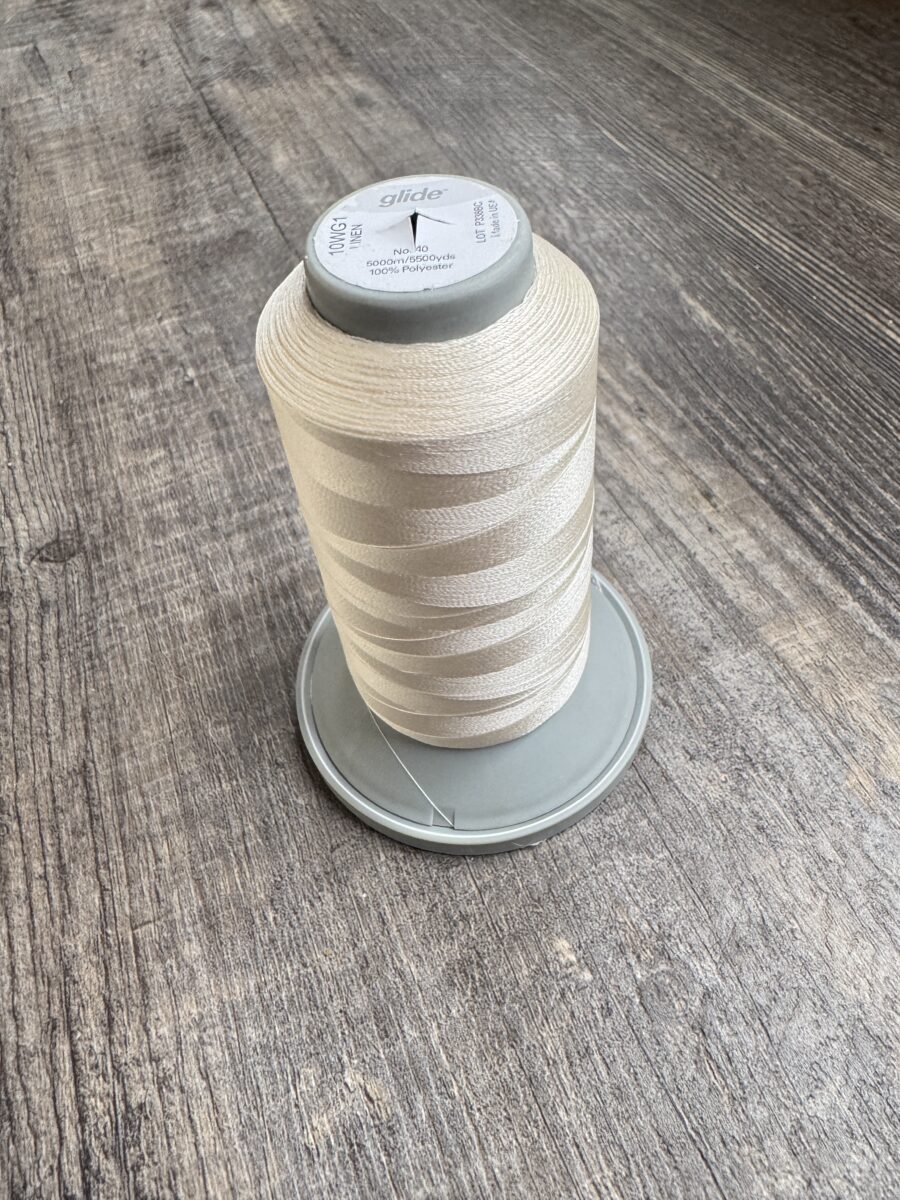
For longarm quilting, I typically use Glide thread, which is a polyester thread. It’s extremely strong and has a beautiful, subtle sheen that shows up nicely in the quilting design.
For machine embroidery, the thread is typically a 40 weight thread. I personally use OESD Isacord thread. It is a 100% polyester thread for that subtle sheen and strength to hold up with the dense embroidery stitches.
For machine binding, I usually try to match the thread color closely to the binding fabric so the stitching blends into the edge of the quilt. I typically use the 50 weight Aurifil thread that I use for piecing.
Different parts of the quilting process benefit from different thread characteristics, so it’s normal to use more than one type of thread throughout a project.
Do You Need Special Thread for Accuracy?
Not necessarily.
Accuracy in quilting comes much more from consistent seam allowances, careful cutting, and good pressing habits.
That said, using a thread that is too thick or very linty can make things harder than they need to be. A reliable 50 weight cotton thread is a great choice for most piecing and keeps seams neat and manageable.
For me, 50 weight Aurifil has been a dependable option that works well across a wide range of projects.
Final Thoughts
Thread may seem like a small detail, but it plays an important role in how smoothly your sewing goes.
A good quality thread that runs cleanly through your machine helps prevent unnecessary interruptions and keeps your piecing consistent. For most quilting projects, a 50 weight cotton thread offers a great balance of strength, low bulk, and smooth stitching.
Once you find a thread that works well in your machine, sticking with it can make the entire quilting process feel more predictable and enjoyable.
Sometimes accuracy is built from the big skills. And sometimes it comes from small choices that quietly support the work you’re already doing well.