
Trimming Quilt Blocks for Accuracy (Beginner Quilting Guide)
Even when you’ve cut carefully, sewn accurate seams, pressed properly, and managed fabric shifting, quilt blocks can still come out slightly off.
When purchasing through links on this site, I may earn an affiliate commission at no cost to you.
That’s normal.
Trimming and squaring quilt blocks is the step that brings everything back into alignment. It’s not about fixing mistakes — it’s about making sure every block starts at the same size so they fit together easily when it’s time to assemble your quilt.
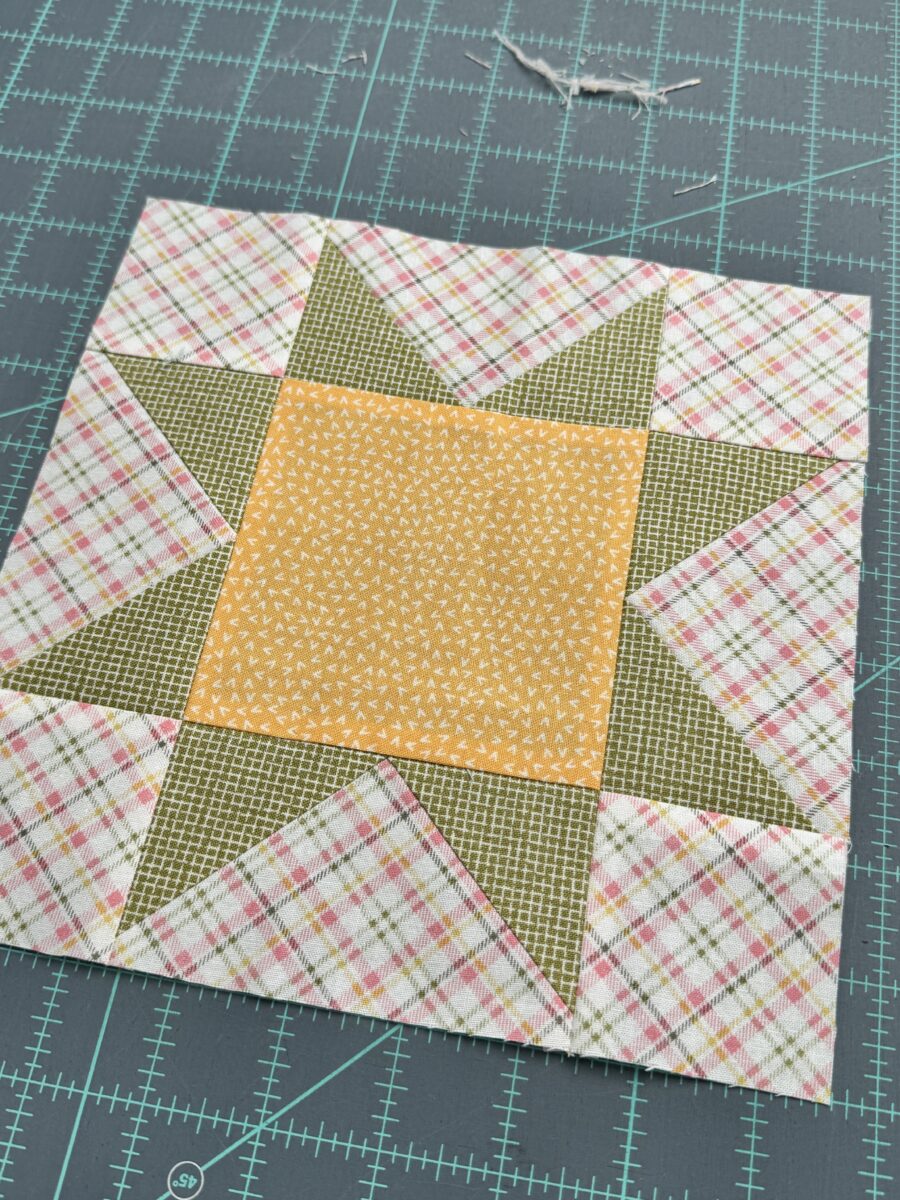
This post is part of my Quilting Foundations series, where we focus on the small skills that quietly make quilting feel easier and more predictable.
But First: Some Transparency On My Own Sewing
While squaring up the blocks is great, and an effective tool, at this point in my sewing journey, I rarely need to square up blocks. Is it because my blocks are perfect? Absolutely not. But, I sew consistently enough that if they are slightly too small, they almost are all the same “slightly too small”. So when it comes to joining blocks, they still line up pretty darn close, and that’s good enough for me. The key here is consistency and improving accuracy over time.
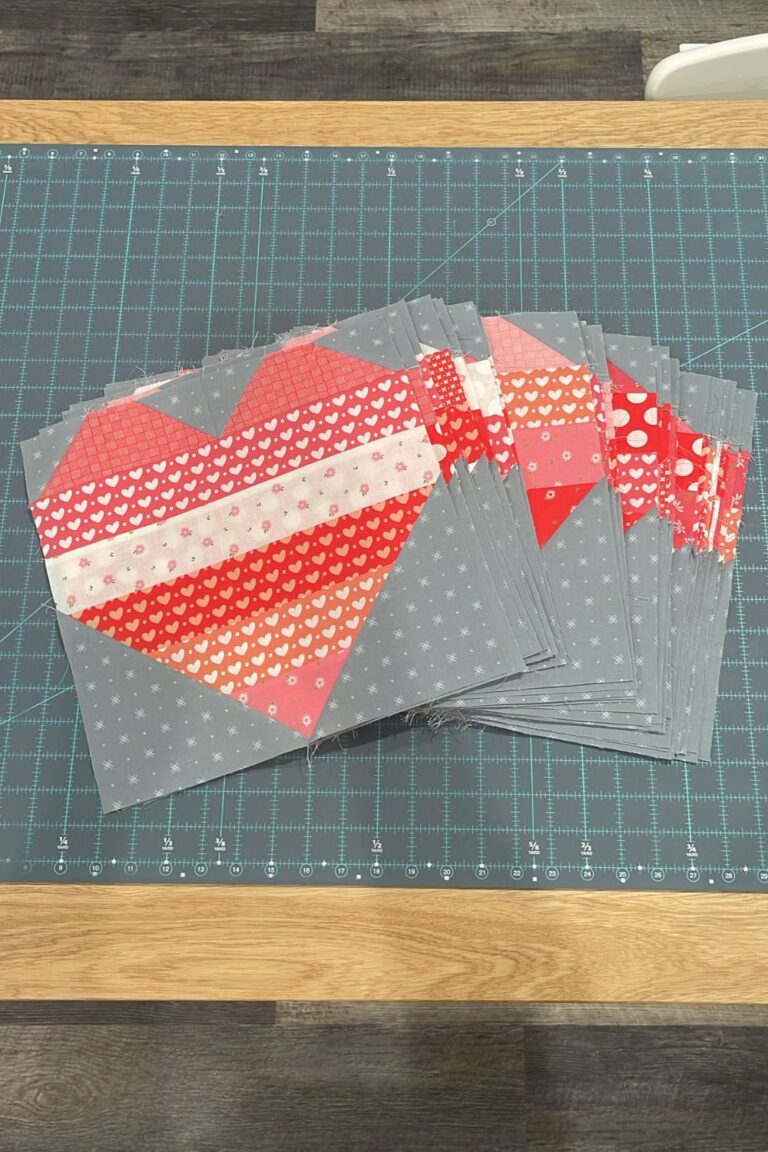
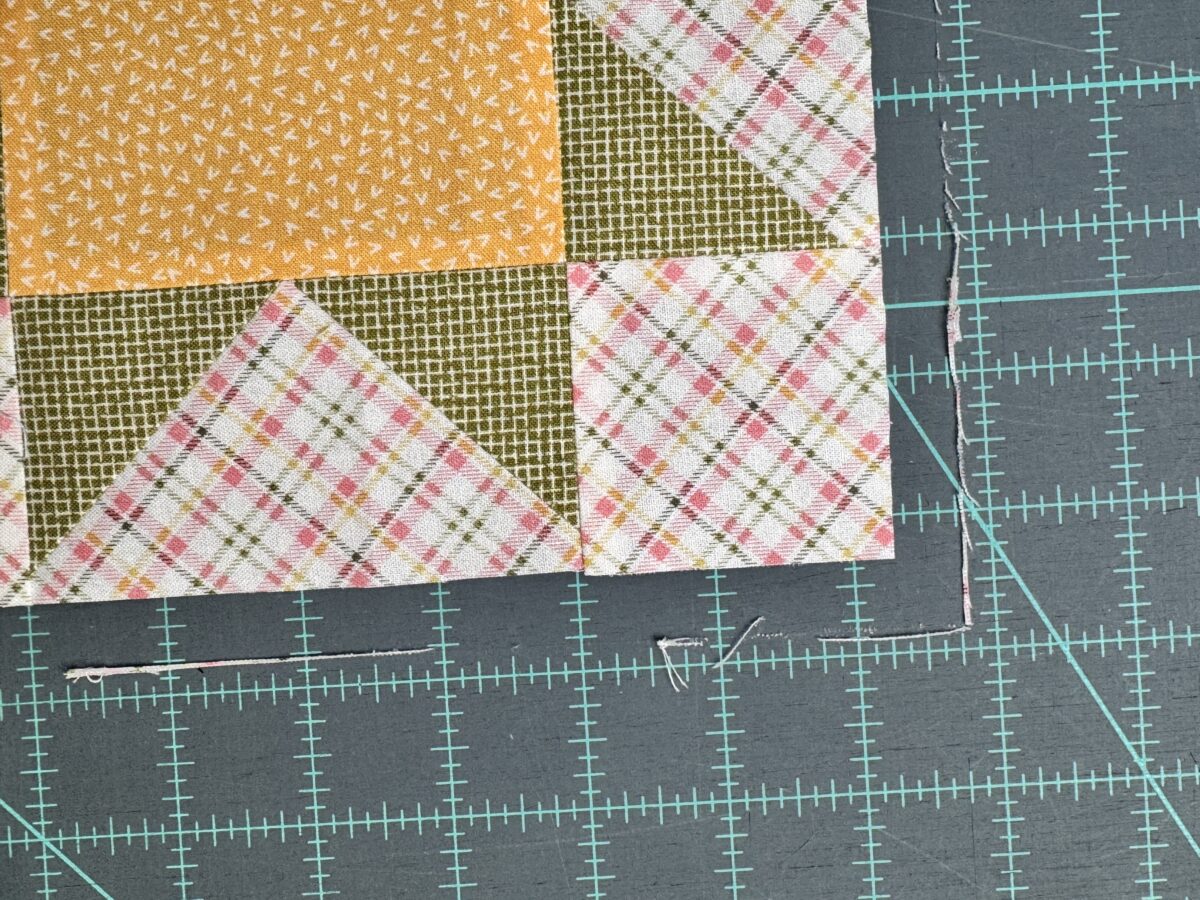
Occasionally I have a block that needs some trimming. Usually though, it’s just a few stray threads or the trimming the tails on my stitched lines. So don’t get discouraged by this post by any means. Just work on improving consistency and square up the blocks as needed.
What Does “Squaring Up” a Quilt Block Mean?
When quilters talk about squaring up a block, they mean trimming it so all four sides are straight, the corners are true right angles, and the block measures the size it’s supposed to.
That usually means trimming off a tiny amount of fabric — sometimes just threads or a very thin sliver. That’s expected and it doesn’t mean anything went wrong earlier.A squared block may lose a tiny sliver of fabric — that’s expected and perfectly okay.
Why Trimming Quilt Blocks Matters
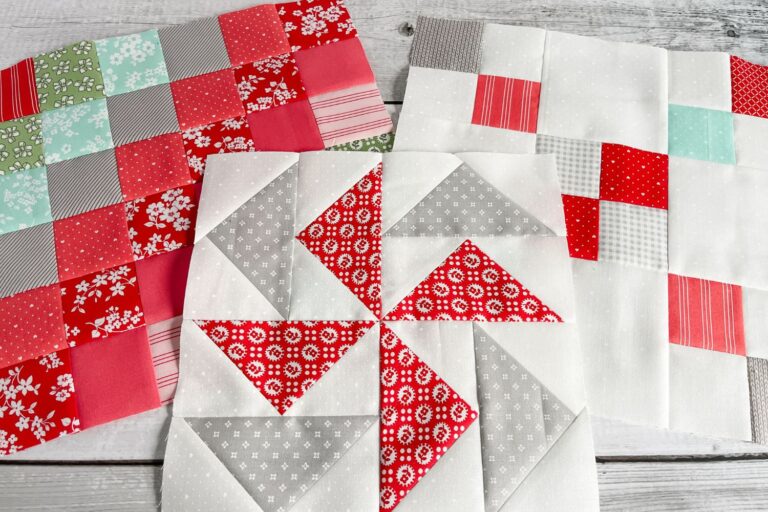
Blocks that vary even slightly in size are much harder to assemble into rows. You may notice seams that don’t line up, rows that don’t match in length, or quilt tops that start to ripple as you sew.
Trimming gives every block the same starting point. When all the blocks measure exactly the same, everything downstream — rows, borders, and quilting — becomes easier.
When to Trim Your Blocks
Trimming should always happen AFTER the block has been sewn and pressed.
Pressing comes first because fabric relaxes as it’s pressed, and trimming before that can lead to blocks that change size later. Once a block is pressed and laying flat, it’s ready to be squared up.
Choosing the Right Tools
You don’t need anything fancy to trim quilt blocks accurately, but the right basics matter.
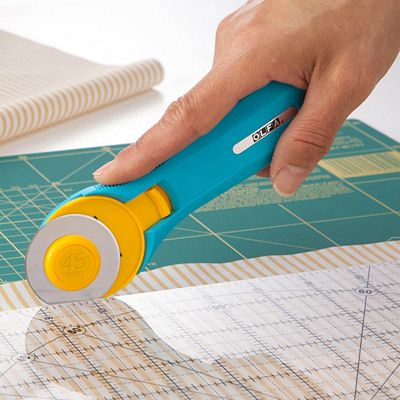
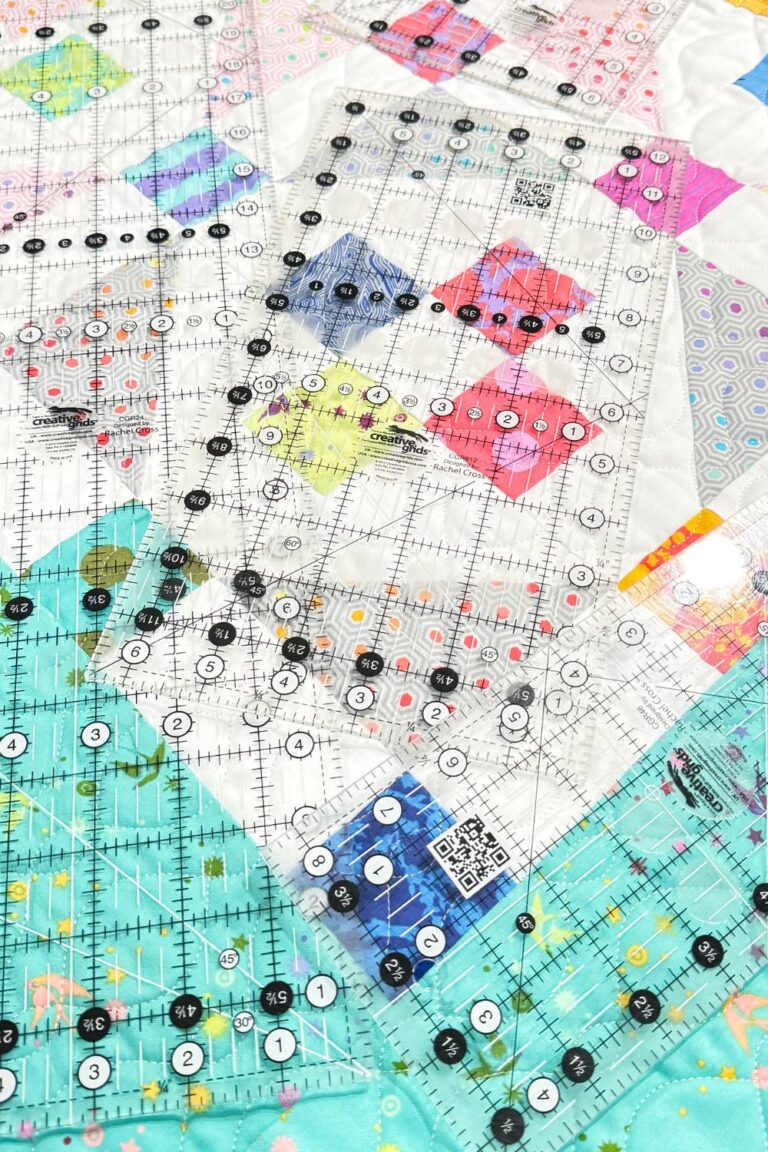
A square ruler that’s slightly larger than your unfinished block size is ideal. Pair that with a sharp rotary blade and a good cutting mat, and you’re set. If your ruler tends to slide, adding non-slip dots can make trimming feel much more controlled.
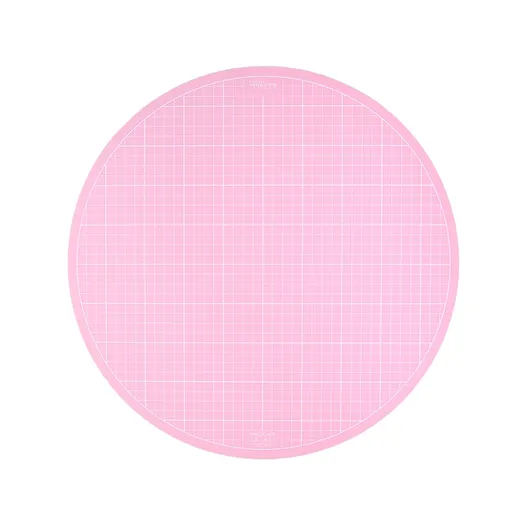
A rotating cutting mat can also help, especially if you’re trimming a lot of blocks and want to avoid lifting and repositioning them constantly.
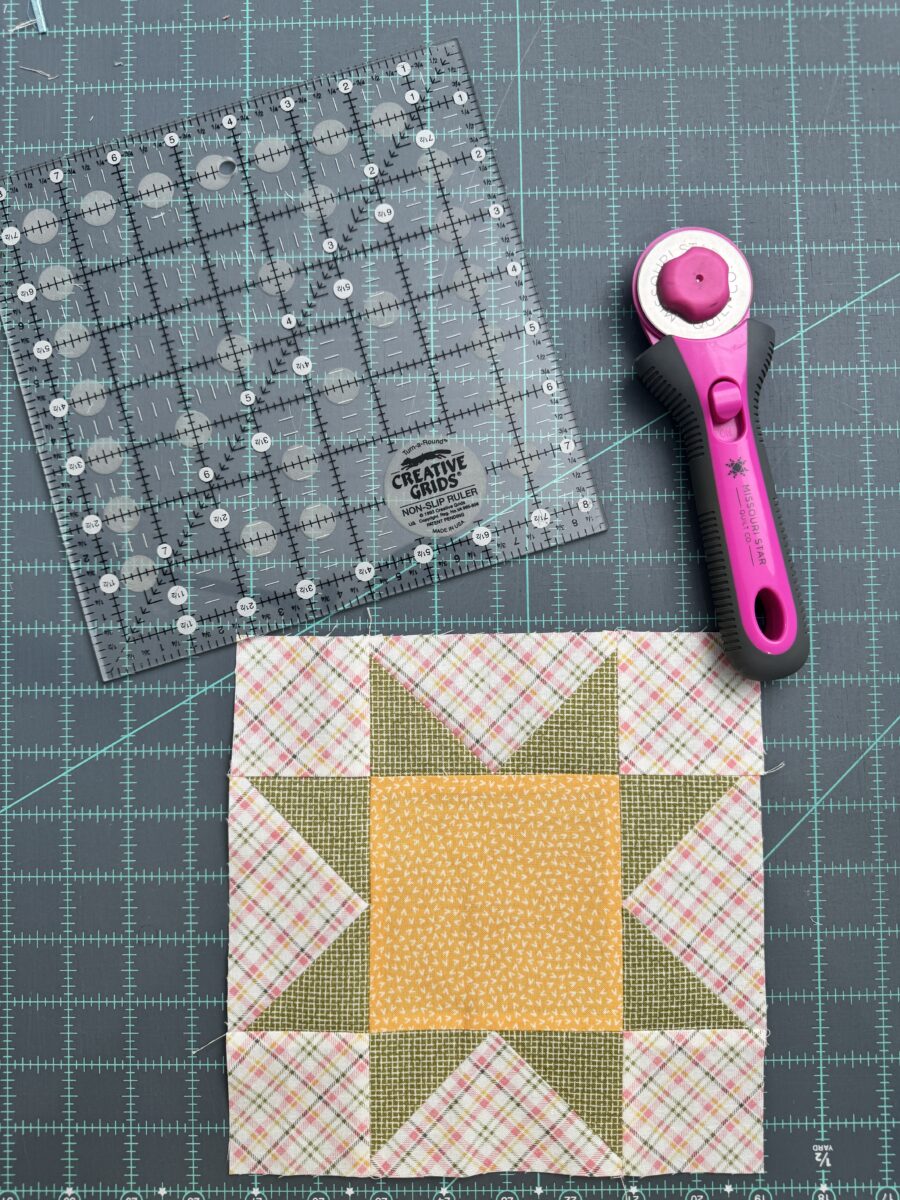
Step-by-Step
Trimming a Quilt Block
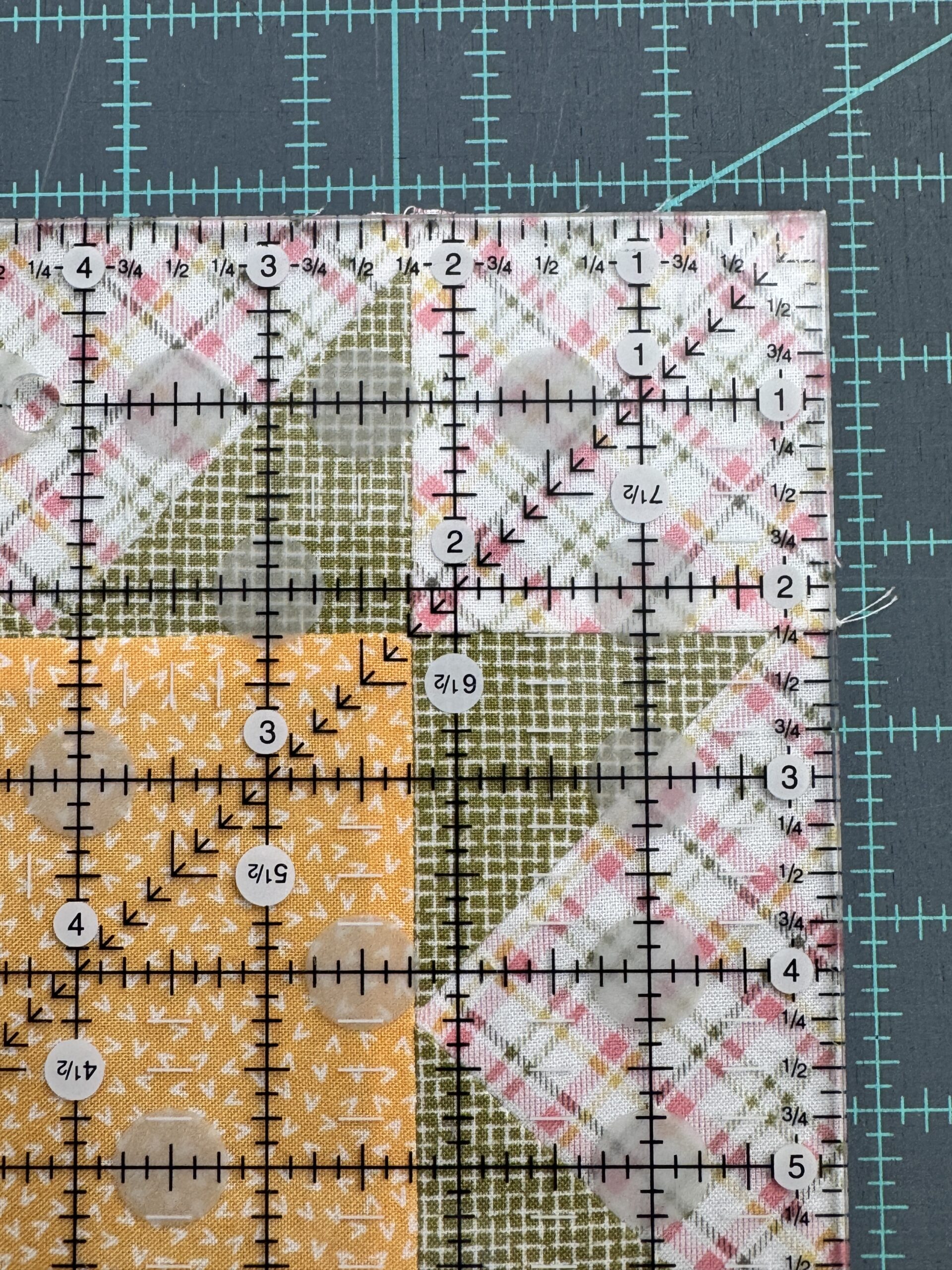
Start by placing the pressed block on your cutting mat with the right side facing up. Instead of lining your ruler up with the raw edges of the fabric, focus on the seams. Seams are the most reliable reference point for accuracy.
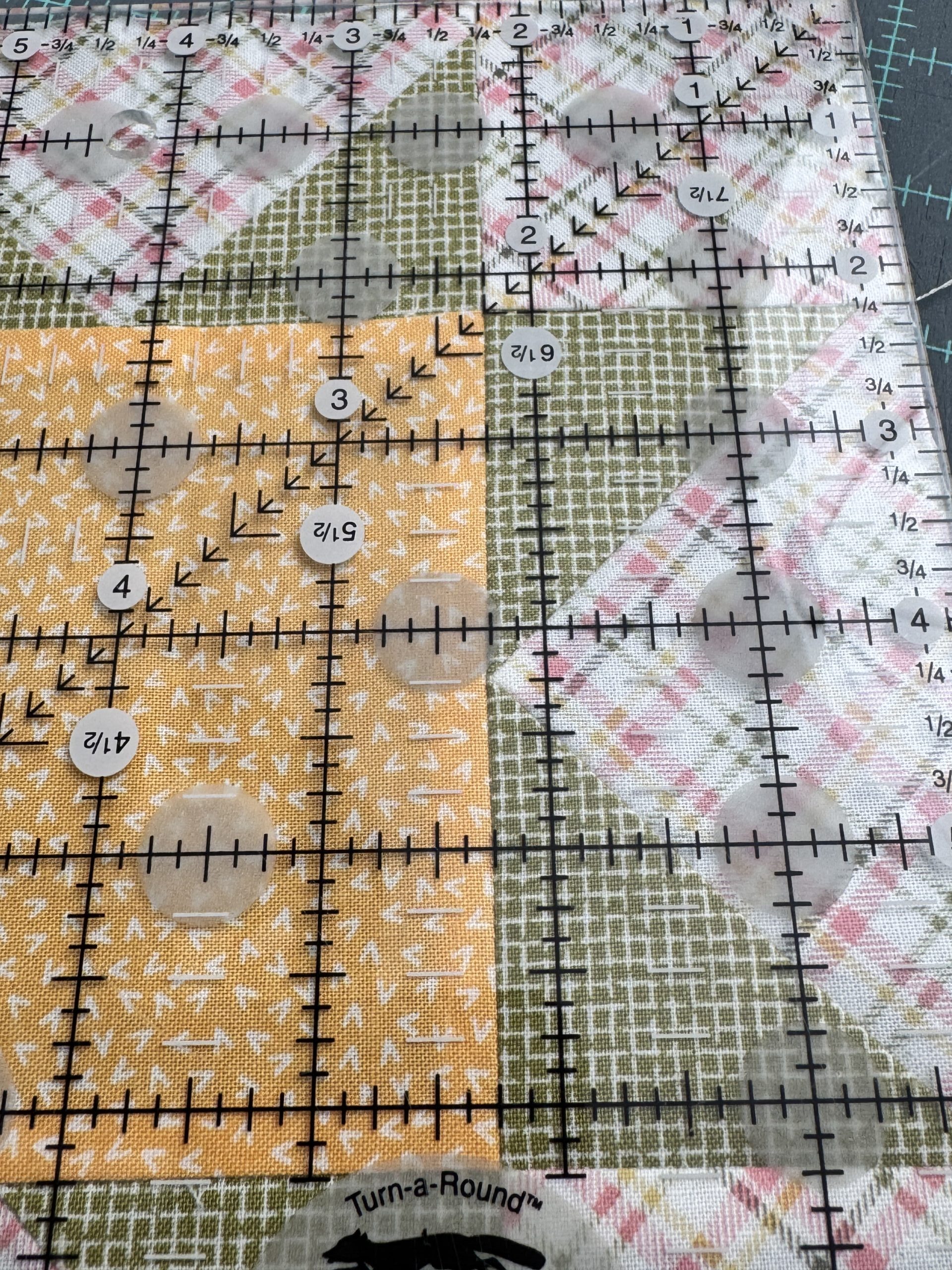
Align the ruler so the horizontal and vertical lines cross through key seam intersections or match the block’s center, depending on the design. This helps ensure the block stays square rather than just trimmed evenly.
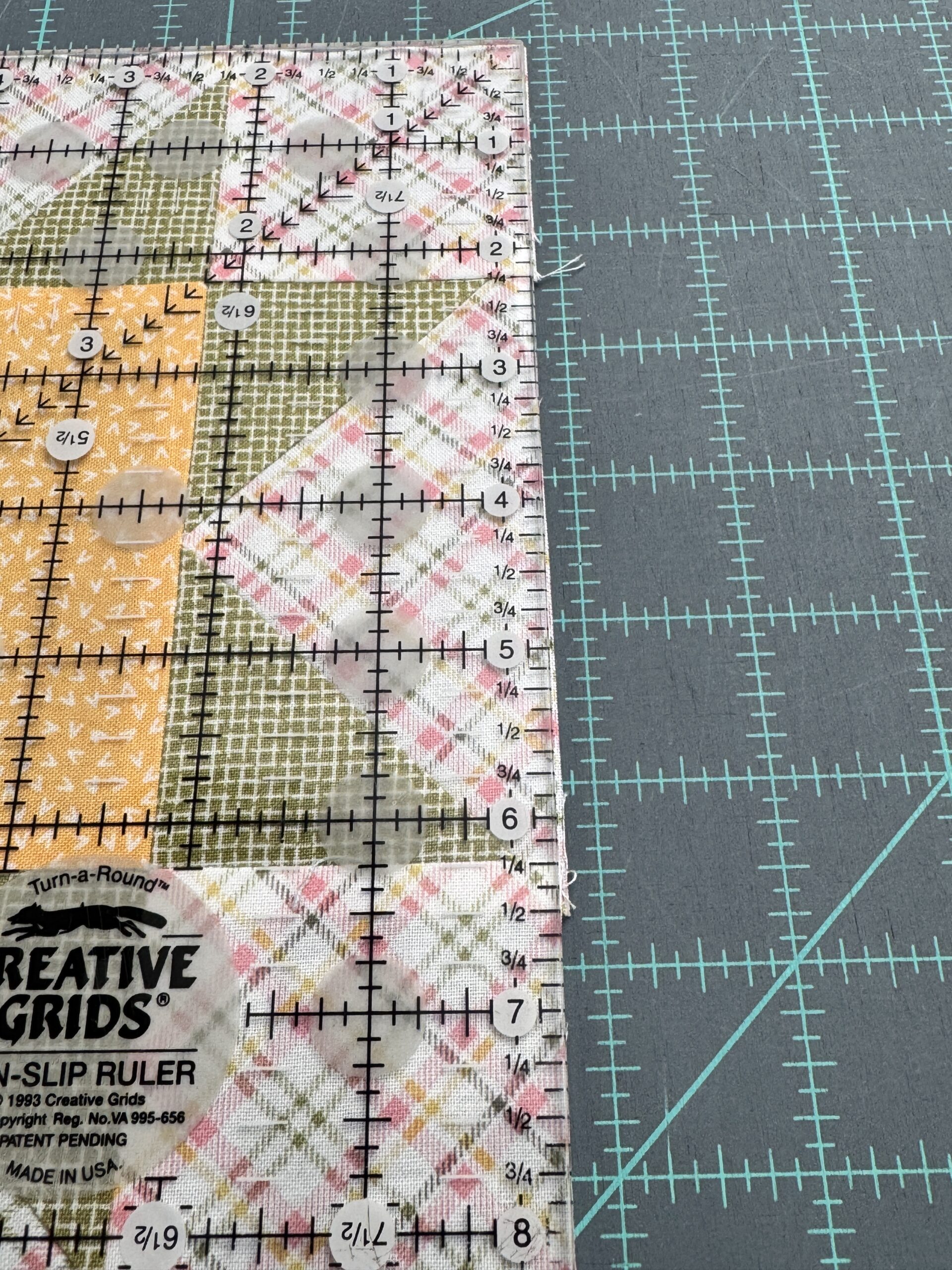
Once the ruler is aligned, trim two adjacent sides of the block. Then rotate the block 180 degrees and line the freshly trimmed edges up with the ruler’s measurement lines. Trim the remaining two sides.
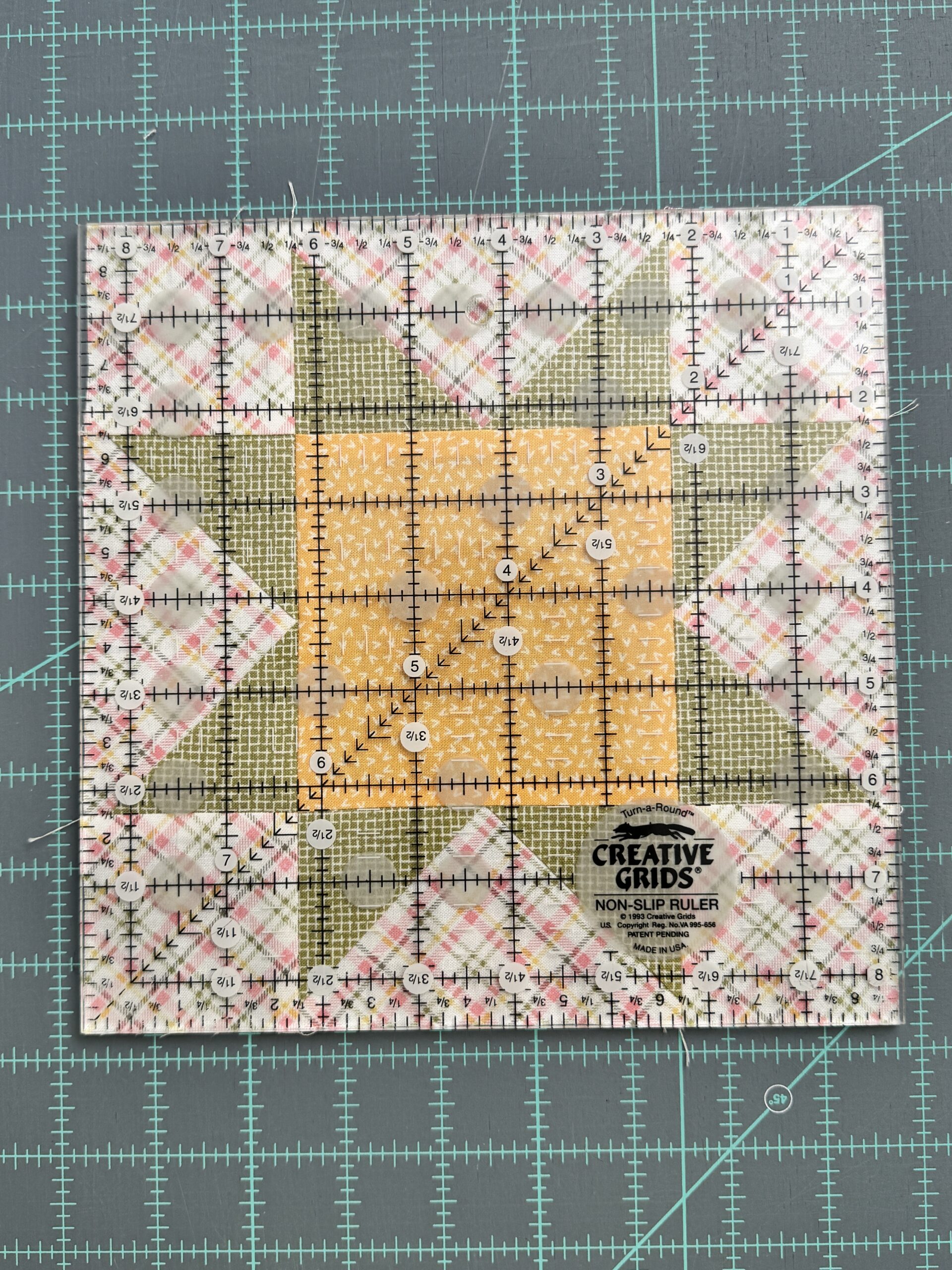
At this point, the block should measure exactly the unfinished size called for in the pattern.
How Much Fabric Should You Be Trimming?
In most cases, trimming quilt blocks removes very little fabric. If you find yourself cutting off large amounts, it’s a sign to pause and check earlier steps like seam allowance or pressing.
Trimming is meant to fine-tune accuracy, not compensate for major size differences.
How to Protect Points While Trimming Quilt Blocks
One of the biggest fears with trimming is cutting off points. The key is ruler alignment.
When diagonal seams are involved, take a moment to make sure the seam lines line up with the ruler’s diagonal markings before trimming. Slow, intentional cuts help preserve points and prevent disappointment.
Should You Trim Every Block?
For beginners, trimming every block is a really good habit.
It builds consistency, prevents surprises during assembly, and makes the entire quilt top come together more smoothly. As you gain experience, you may find patterns where trimming isn’t as necessary, but early on, consistency matters far more than speed.
Common Trimming Mistakes
Final Thoughts
Trimming quilt blocks isn’t a sign that something went wrong. It’s a normal, professional step in quilt construction that helps everything fit together the way it should.
When blocks are squared and consistent, rows assemble more easily, seams line up better, and quilt tops stay flatter. A few careful trims now can save a lot of frustration later.
Small adjustments make a big difference – and trimming is one of the simplest ways to improve accuracy in quilting.