
Disappearing Nine Patch Quilt Block: A Simple Twist with Big Impact
The Disappearing Nine Patch is one of those quilt blocks that feels a little bit like magic the first time you make it.
When purchasing through links on this site, I may earn an affiliate commission at no cost to you.
You start with a basic Nine Patch block, and with a few simple steps, it turns into something that looks much more complex. It’s still beginner-friendly, but it has a lot more movement and variation than a traditional patchwork layout.
It’s also a great option if you’re looking for a scrap-friendly quilt that doesn’t feel overly simple.
Let’s walk through how it works.

What Is a Disappearing Nine Patch?
A Disappearing Nine Patch starts as a standard Nine Patch block.
Once that block is sewn together, it’s divided into four equal sections. Those sections are then rotated and rearranged before being sewn back together into a new block.
That simple change in layout creates a completely different look, even though the construction is still very straightforward.
Step 1: Make a Standard Nine Patch
Start by creating a traditional Nine Patch block using nine equal squares arranged in a 3 × 3 grid.
If you need a refresher on that process, I have a full Nine Patch tutorial that walks through cutting, layout, and piecing.
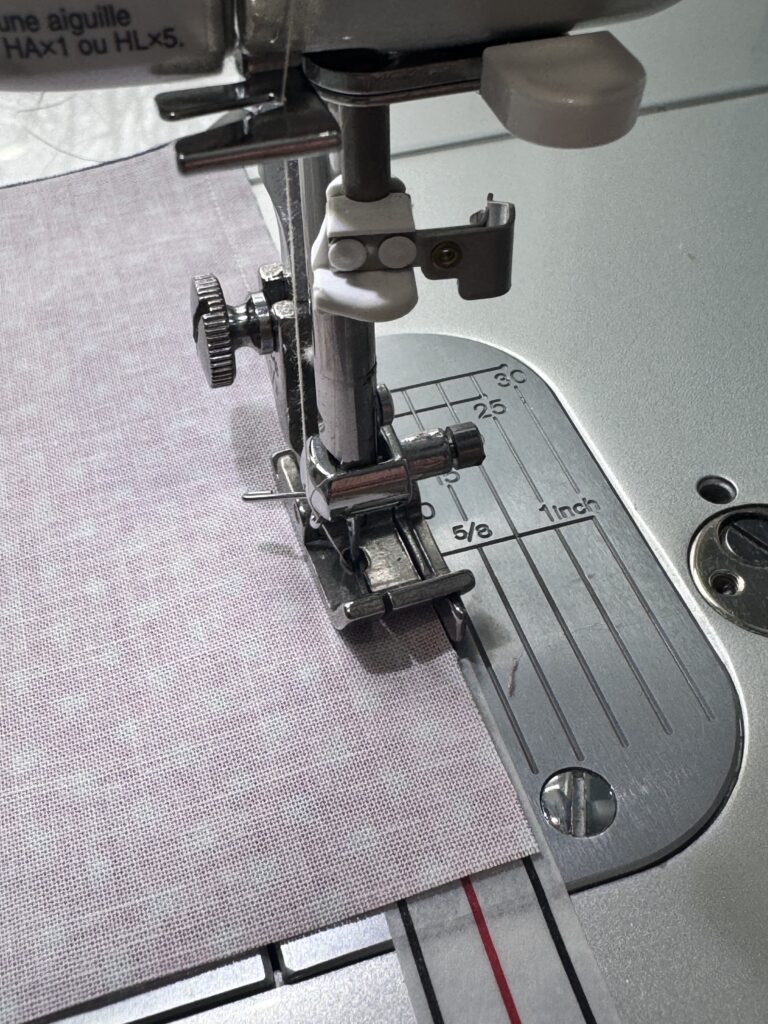
At this stage, accuracy matters. Because you’ll be dividing the block into sections and sewing it back together, consistent seam allowances will make a noticeable difference in how everything lines up later.

Step 2: Divide the Block into Four Sections
Once your Nine Patch block is complete, divide it into four equal sections.
The easiest way to do this is to measure the block and divide it evenly in both directions. Taking a moment to measure carefully here helps keep all four sections the same size, which makes reassembly much smoother.


Step 3: Rearrange the Sections
This is where the transformation happens.
Rotate and rearrange the four sections to create a new layout. There isn’t just one “correct” way to do this — different arrangements will give you different visual results.
This is also the step where it helps to slow down a bit. Lay the sections out and try a few options before sewing anything together.


Step 4: Sew the Block Back Together
Once you’ve decided on a layout, sew the sections back together just like you would a standard block.
Because there are now more seams within each section, nesting seams becomes even more important. Taking the time to match up intersections will help the finished block come together cleanly.
Give the block a final press and check your size before moving on.
Fabric Ideas for Disappearing Nine Patch
This block works well with almost any fabric combination.
It’s a great scrap buster if you want to use up leftover fabrics from other projects, but it also looks just as nice with coordinated fabrics from a single collection.
You can keep things high contrast for a bold look, or use closer value fabrics for a softer, blended effect. The rearranging step adds enough movement that even simple fabric choices can look interesting.
Common Challenges to Watch For
Common Challenges to Watch For
Because this block has more seams than a traditional Nine Patch, seam allowance accuracy becomes even more important.
If your seam allowance is slightly off, those small differences can add up across the block and affect how the sections fit back together.
Layout is the other area where things can get tricky. Once you start rotating sections, it’s easy to lose track of the arrangement you liked best.
One thing that helps is laying everything out on a large surface or a design board before sewing. Once you find a layout you like, take a moment to lay out all of your blocks the same way before you start reassembling them. That keeps everything consistent across the quilt.
Why the Disappearing Nine Patch Is Worth Trying
The Disappearing Nine Patch is a great way to take a very simple block and give it a little more visual interest without adding complicated techniques.
It’s beginner-friendly, works well with scraps or coordinated fabrics, and gives you a lot of flexibility in how the final quilt looks.
If you’re comfortable making a Nine Patch, this is an easy next step that opens up a whole new range of design possibilities.