
Snowball Quilt Block: A Simple Block with Endless Possibilities
The Snowball Block is one of the simplest quilt blocks you can make, but don’t let its simplicity fool you. This classic block has been used in quilts for generations and can create everything from traditional chain designs to modern geometric layouts.
When purchasing through links on this site, I may earn an affiliate commission at no cost to you.
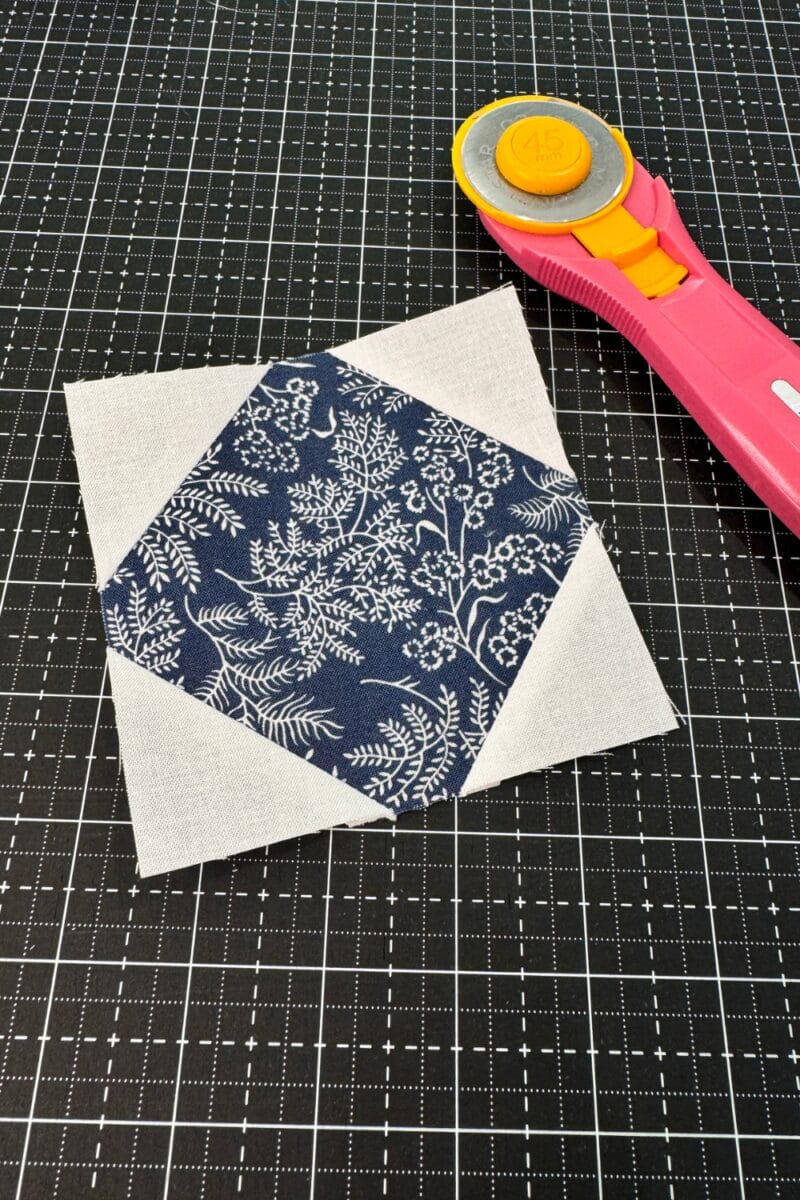
At its core, a Snowball Block is simply a square with the corners replaced by triangles. The construction is quick, beginner-friendly, and a great way to practice the stitch-and-flip technique used in many other quilt blocks.
What Is a Snowball Block?
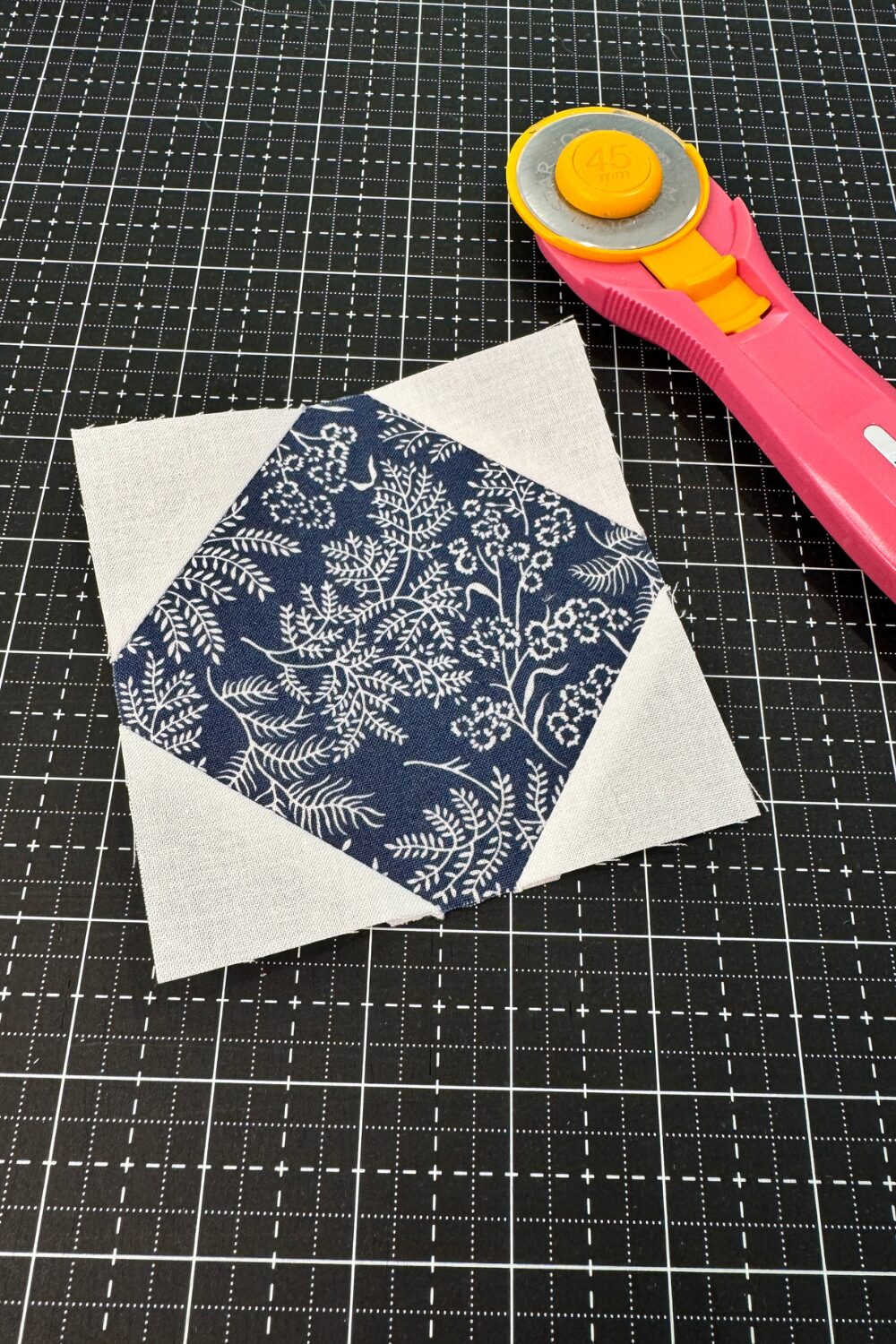
A Snowball Block starts with a large center square. Small squares are sewn onto each corner using the stitch-and-flip method, creating four corner triangles once the excess fabric is trimmed away and pressed.
Historically, many Snowball Blocks featured white corner triangles on a darker background fabric, giving the appearance of a snowball. While the name has remained the same, modern quilters use every color and fabric combination imaginable.
One of the reasons this block remains popular is that it works beautifully on its own, but it also pairs exceptionally well with other blocks to create secondary designs across a quilt.
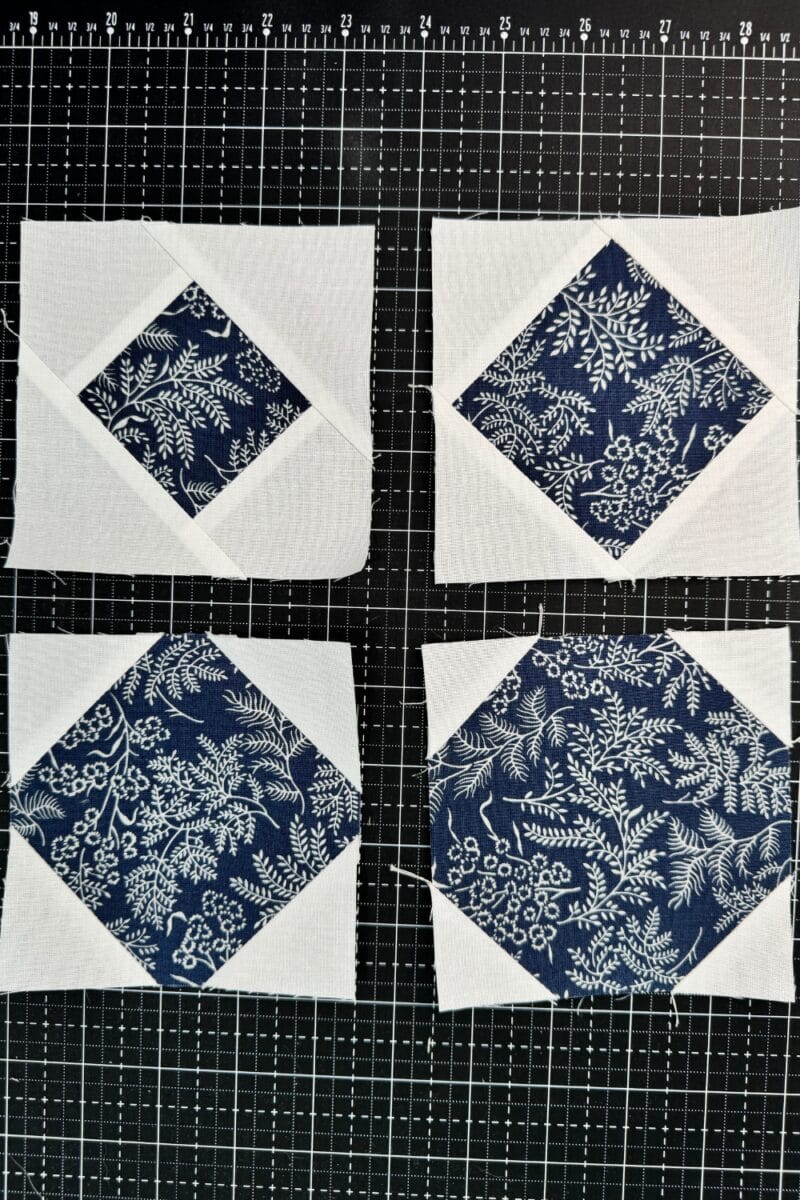
By varying the sizes of the sew and flip corners, you can also get a variety of looks using the same method. Using large corners gives a square in a square look, whereas smaller corner squares gives the more traditional snowball look.
Materials You’ll Need
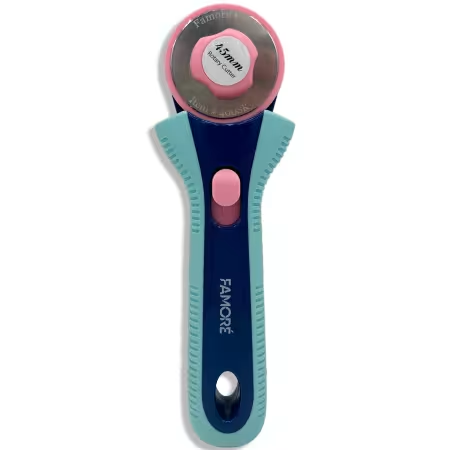
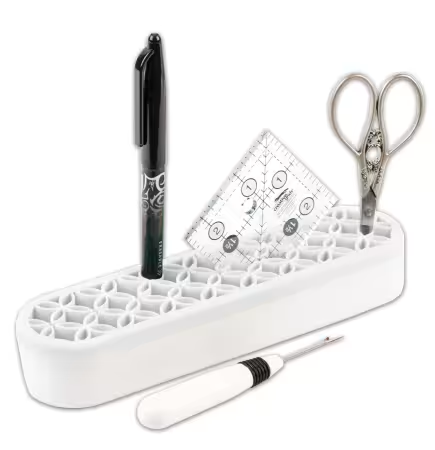
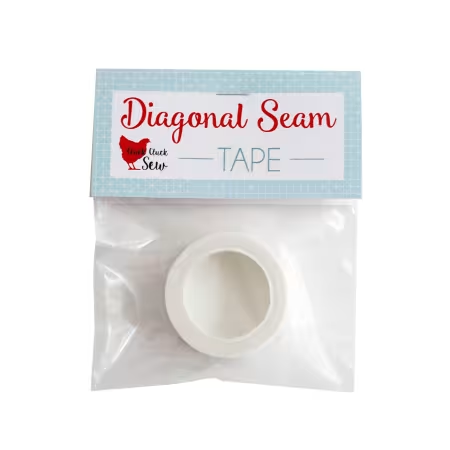
To make a Snowball Block, you’ll need:
The exact sizes will depend on the finished block size you’re making. Your large square will be the same size as the unfinished block size. The smaller corner squares will be based on how steep of a corner you want. The larger the corner squares, the greater the clipped corner effect.
How to Make a Snowball Block
Step 1: Mark the Corner Squares
On the wrong side of each small square, draw a diagonal line from corner to corner.
These lines will serve as your sewing guides.
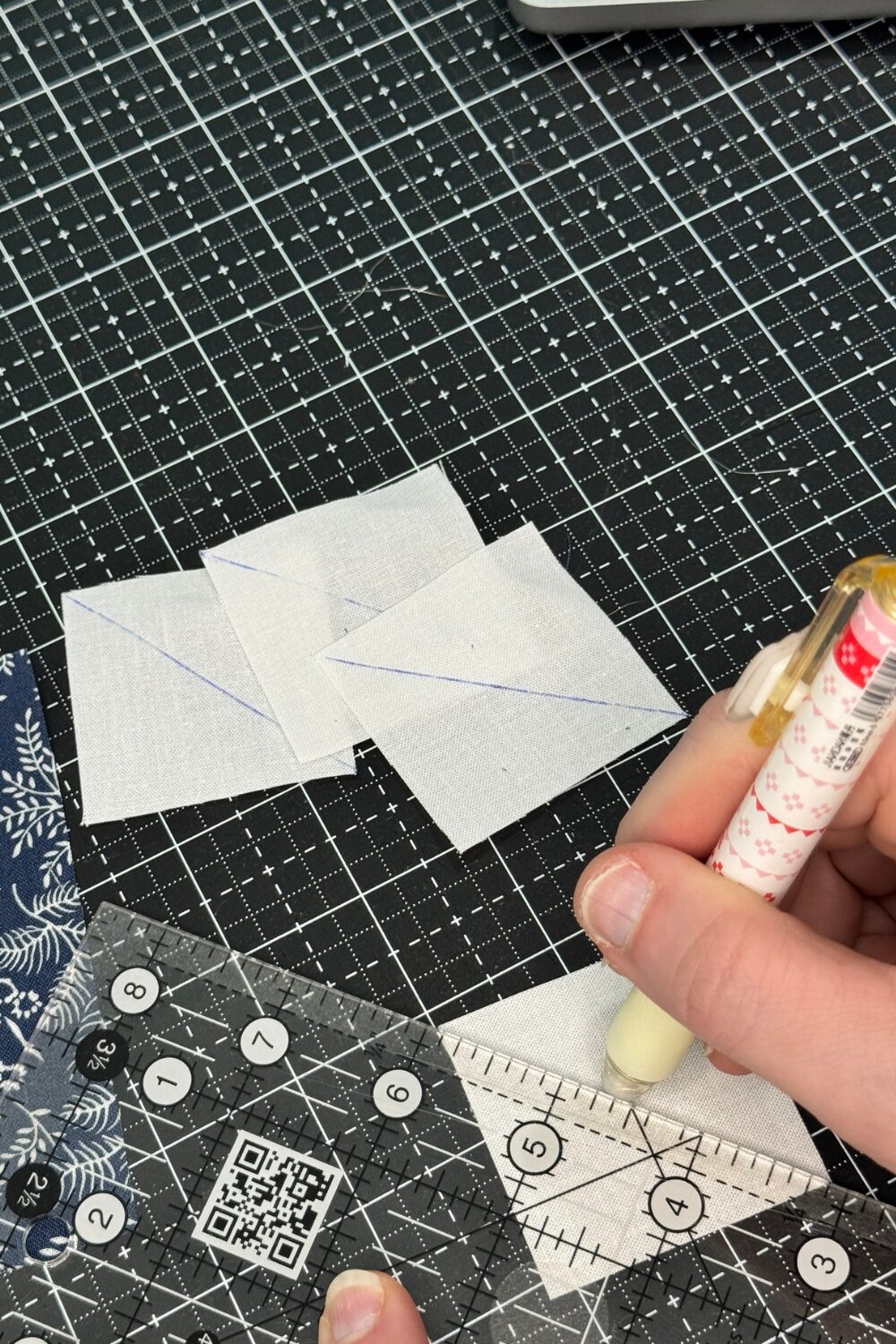
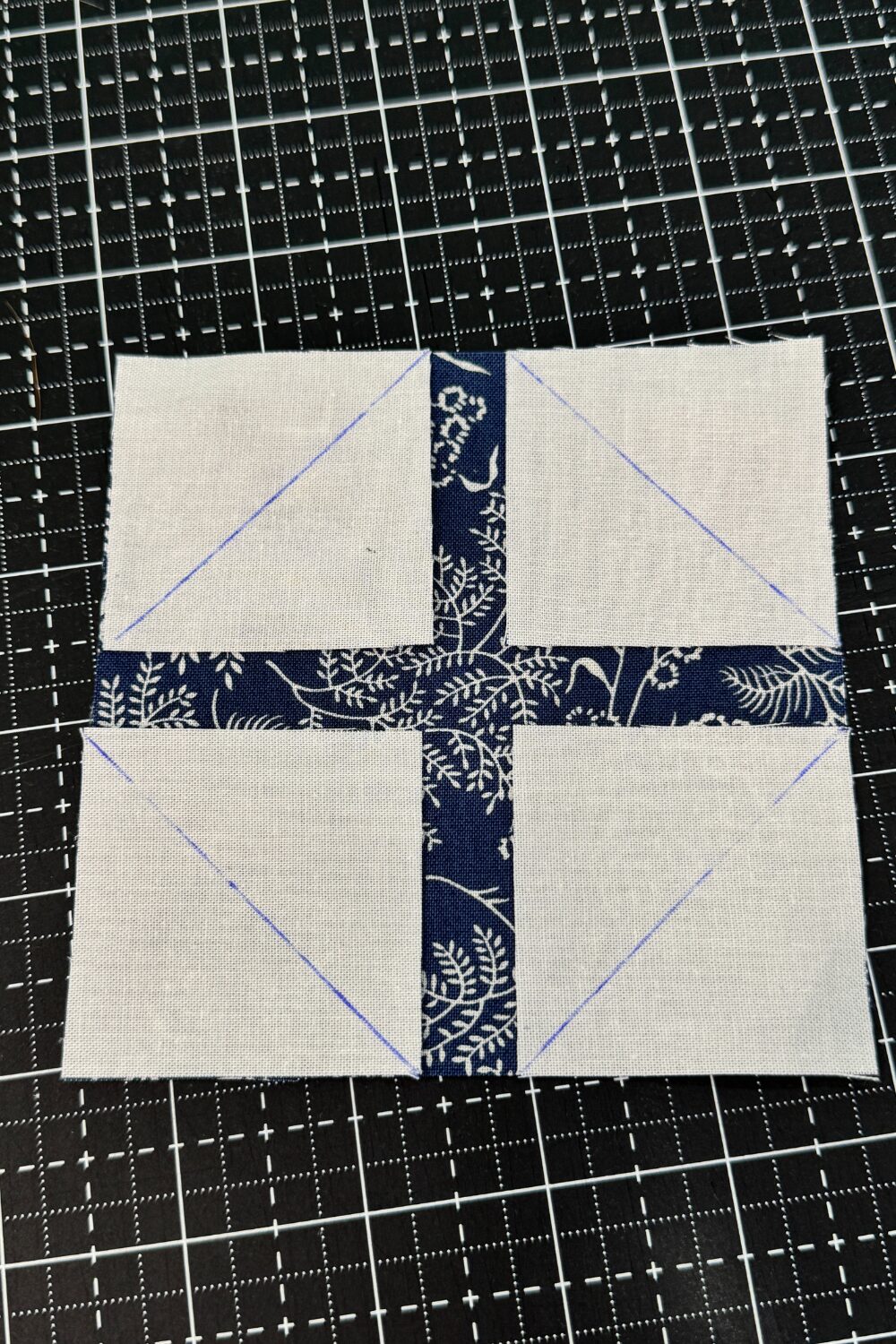
Step 2: Position the Corner Squares
Place a small square on each corner of the larger center square, right sides together.
The diagonal lines should run from corner to corner as shown.
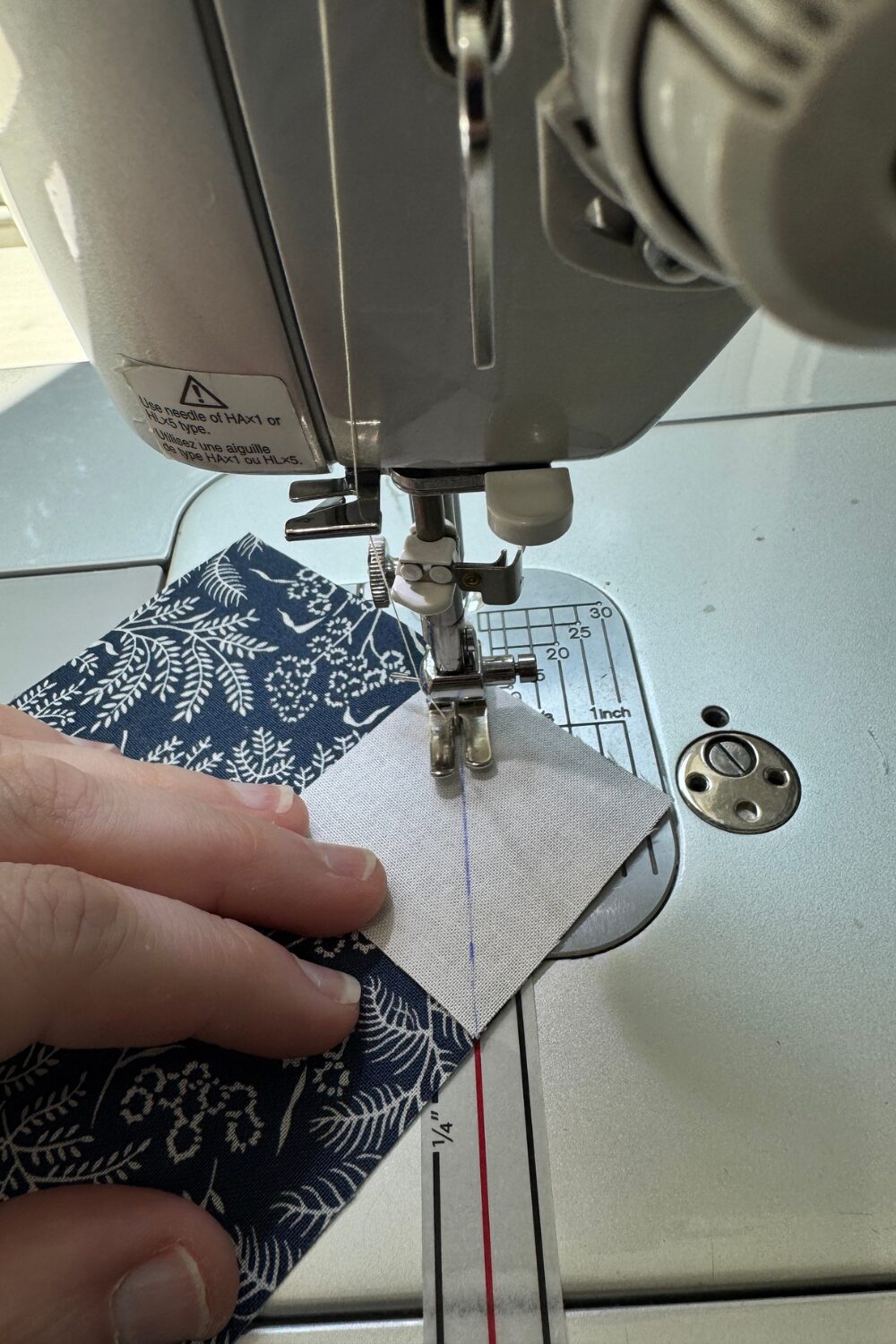
Step 3: Sew on the Lines
Sew directly on each drawn line.
Take your time and try to stay centered on the marking line for the most accurate results.
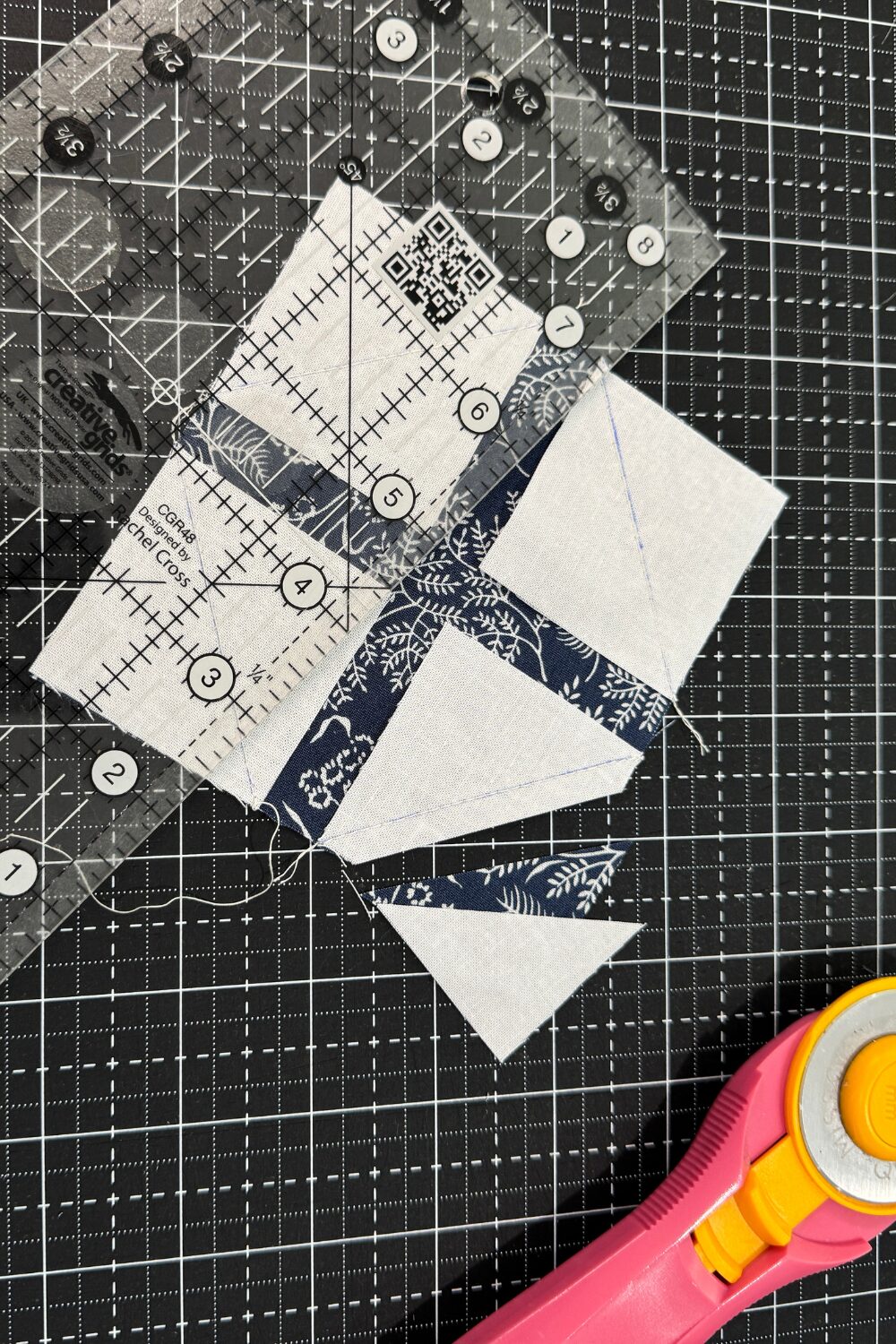
Step 4: Trim the Excess Fabric
Trim away the excess fabric, leaving a ¼” seam allowance beyond the stitching line.
This reduces bulk and allows the corners to lie flat once pressed.
Step 5: Press the Corners Open
Press each corner triangle away from the center square.
At this point, your Snowball Block is complete.
A Small Tip for Accuracy
Before trimming all four corners, press one corner open to verify that the triangle reaches exactly to the corner of the block. If your stitching line drifted slightly, it’s much easier to correct before trimming everything else.
Why Quilters Love Snowball Blocks
Part of the appeal of the Snowball Block is its versatility.
The block is easy enough for beginners to master quickly, but it can also be used in sophisticated quilt designs. By changing the size of the corner squares, you can create dramatically different looks without changing the basic construction method.
Snowball Blocks are also a great scrap-busting project since the corner squares require only small pieces of fabric.
Combining Snowball Blocks with Other Blocks
This is where Snowball Blocks become especially interesting.
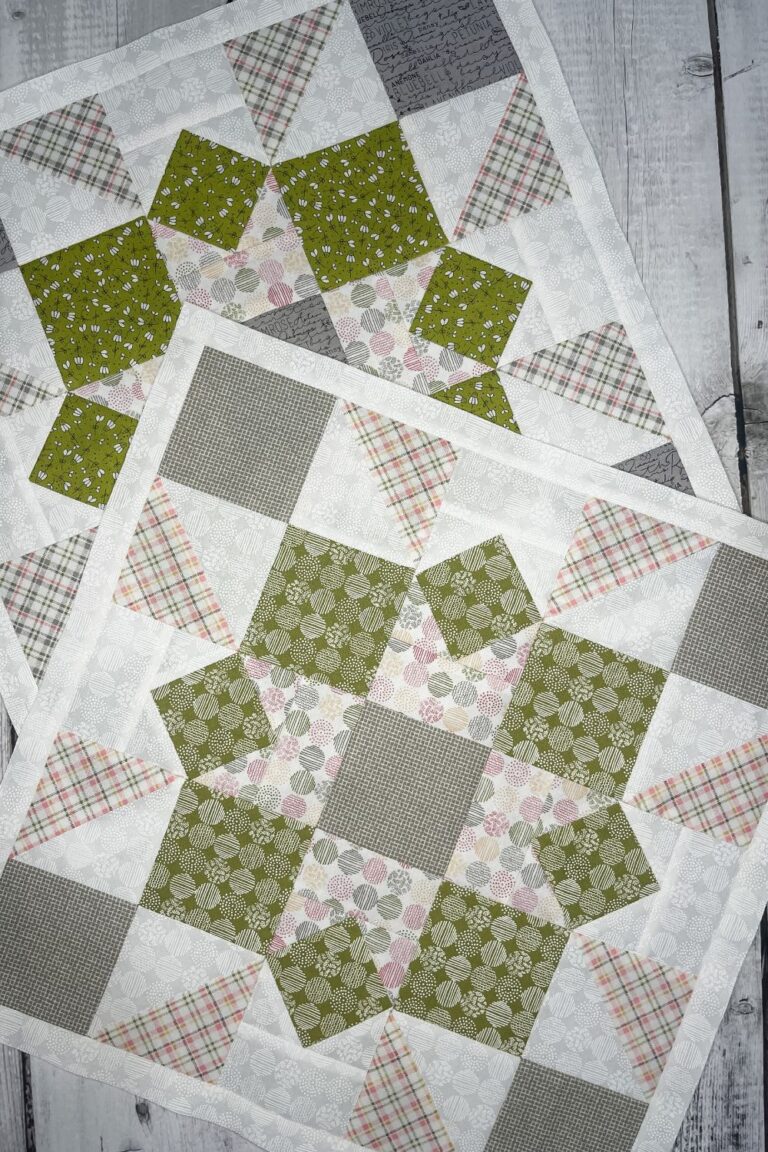
When alternated with Four Patch, Nine Patch, or star blocks, the corner triangles create secondary patterns that travel across the quilt. These connecting shapes can make a quilt appear much more complex than the individual blocks actually are.
Many traditional quilt designs rely on Snowball Blocks to create movement and visual interest between neighboring blocks.
Why This Block Belongs in Your Quilt Library
The Snowball Block is proof that simple doesn’t have to mean boring. It’s quick to make, beginner-friendly, and works beautifully in both traditional and modern quilts.
Whether you’re looking for a block to showcase a favorite fabric, use up scraps, or create secondary designs across a quilt, the Snowball Block is one you’ll find yourself returning to again and again.